New report finds waiata reo Māori growing visibility and cultural connection
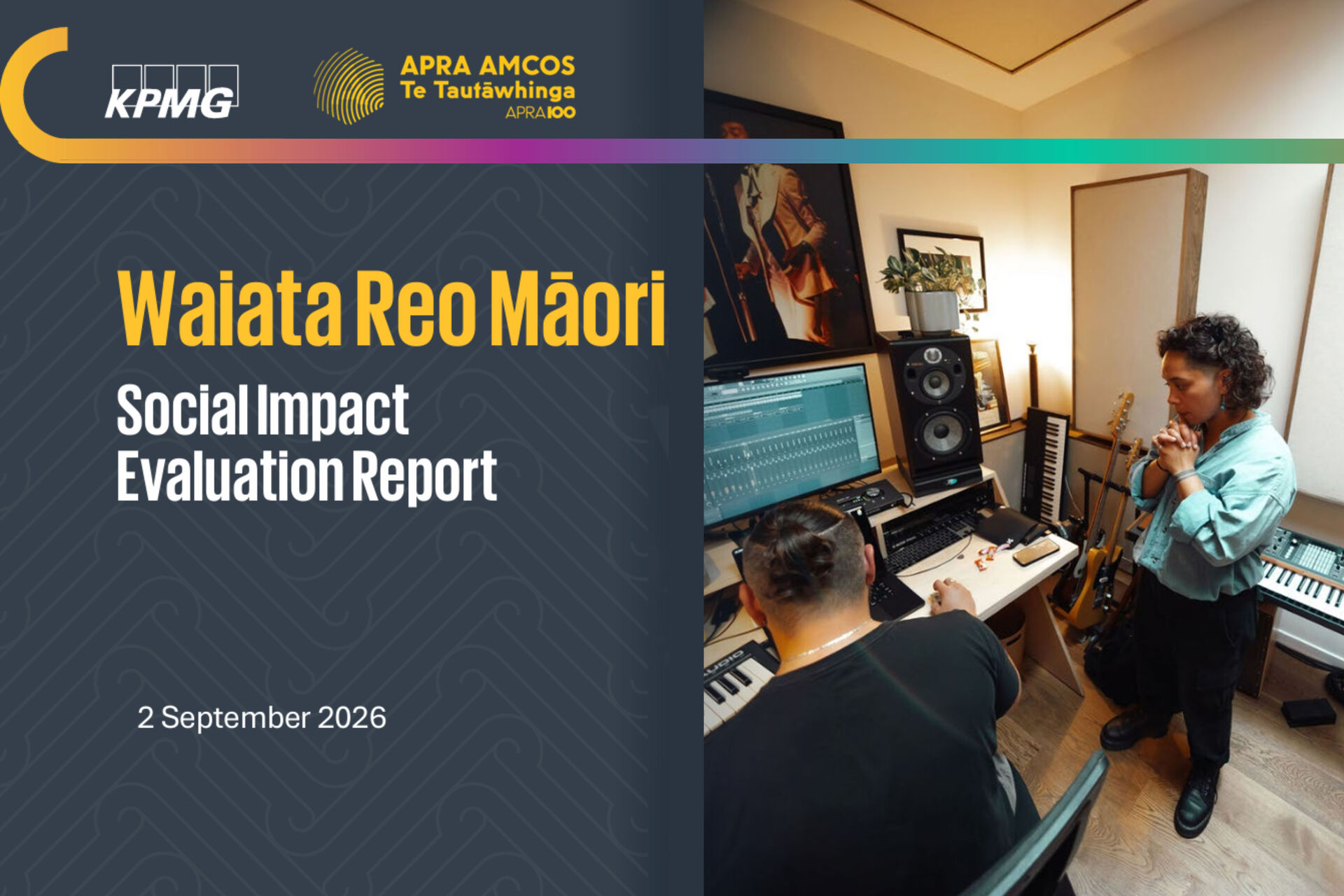
Seven years after Waiata Anthems, the sound of Aotearoa has changed
New KPMG evaluation finds growing visibility and cultural connection through waiata reo Māori
Seven years after Waiata Anthems launched with an album of well-known New Zealand songs reimagined in te reo Māori, new research shows just how much the place of waiata reo Māori in Aotearoa has changed.
The original Waiata Anthems album debuted at number one on the charts in 2019. Since then, more than 400 waiata reo Māori have been produced and released, with the support of APRA programmes, Te Māngai Pāho funding and collaboration across the music sector. Waiata reorua such as SIX60’s Pepeha, Te Wehi and Hori Shaw’s Ready to Ride, Stan Walker’s Māori Ki Te Ao and 35 by Ka Hao and Rob Ruha have seen massive streaming and chart success.
Now, a new KPMG evaluation commissioned by APRA AMCOS Aotearoa, with support from Te Māngai Pāho, has found waiata reo Māori is becoming increasingly visible in everyday life, while contributing to cultural connection and the wider revitalisation of te reo Māori.
Among the 430 people surveyed, 90% said they hear more waiata reo Māori than they did six years ago, while 87% said they encounter it more often in everyday settings. More than nine in ten also see waiata as an important part of Aotearoa’s cultural landscape.
Dame Hinewehi Mohi, APRA NZ’s Director of Māori Membership and creator of Waiata Anthems, says the findings reflect a significant shift from where things were when the kaupapa began.
"When the original Waiata Anthems album was released seven years ago, there was something really powerful about hearing familiar songs New Zealanders already knew being sung in te reo Māori. What we're seeing now is significantly bigger,” says Mohi.
"Waiata reo Māori isn't something people only encounter during a particular week or cultural moment. It's increasingly part of the music people hear in their cars, homes, on radio, streaming platforms, and in everyday life. Waiata helps define and express our cultural identity."
The research found waiata can also provide an accessible way into te reo Māori, with artists and audiences describing music as a low-pressure way to hear, enjoy and engage with the language outside more formal learning environments.
That growth is also changing what sits behind the music.
The number of mātanga reo (Māori language advisors) contributing to commercial compositions has increased from seven to 22 since 2018. KPMG found their role extends well beyond translation, with mātanga reo working alongside artists as cultural and creative partners to help shape the meaning, language, and integrity of waiata.
Artists interviewed for the research also consistently described greater confidence performing waiata reo Māori, with many saying the creative process had strengthened their connection to te reo and te ao Māori.
Some described working alongside mātanga reo as culturally transformative, saying waiata had helped ‘lead them home’.
Nadia Marsh, Hautū Te Hua Waihanga for Te Māngai Pāho, says the growth highlighted in the research reflects years of investment in artists, mātanga reo and the wider Māori music ecosystem.
“Te Māngai Pāho invests in Māori music because it is one of the most powerful ways for te reo Māori to be seen, heard, and spoken in everyday life. Through our funding, emerging and established artists, alongside mātanga reo, are creating high-quality waiata that connect with audiences in Aotearoa and around the world. The outcomes of this research show that te reo Māori is increasingly becoming part of our everyday soundtrack, carrying our language, stories and identity. Every new waiata contributes to a future where te reo Māori is embraced by all.”
Marlon Williams' recent success with his 100% reo Māori album Te Whare Tīwekaweka is one example of how far that shift has come. Williams won three awards at the Aotearoa Music Awards, the Taite Music Prize, Best Country Song, and was the winner of the 2025 Silver Scroll Award. When picking up Album of the Year at the Aotearoa Music Awards, he said “This is not Māori music having its day, this is just a day in Māori music.”
Waiata reo Māori is now being heard across genres ranging from country and heavy metal to reggae and neo-soul.
And the change isn't simply about more music being released. Audiences are continuing to return to it.
KPMG's analysis found that five waiata appeared in the top 10 most-streamed waiata reo Māori in every quarter from the third quarter of 2021 to the first quarter of 2026.
Dame Hinewehi says the next opportunity is to build on that momentum and ensure the waiata being created today continue to have an impact well into the future.
"Seven years in, this isn't about saying the job is done. It's about how we keep supporting great waiata, growing the next generation of artists and mātanga reo, creating sustainable pathways in music, and making sure the songs being produced today are still being sung by generations to come."
About the research
KPMG’s evaluation drew on interviews with seven artists and five mātanga reo, a six-person audience focus group, a survey of 430 people, streaming data and programme documentation.
The audience survey primarily reached people already engaged with waiata reo Māori. KPMG notes the findings provide insight into the experiences of engaged audiences and should not be interpreted as representative of all New Zealanders.
For the purposes of the evaluation, waiata reo Māori refers to waiata comprising at least 50% te reo Māori, or waiata classified as waiata reo Māori by recognised music-sector organisations.
For media enquiries, please contact:
Lotte Corrigan | Pead | 027 500 2800 | [email protected]